One of the most prominent features of life in Spain is the importance of family and social networks. Family plays a central role in Spanish society, often extending beyond the nuclear family to include grandparents and other relatives. It is common for multiple generations to maintain close contact or live near one another. This reflects a more collectivist cultural orientation, where social bonds and mutual support are highly valued. Daily life often revolves around shared meals and frequent social interactions, reinforcing a strong sense of community. You have probably heard about this “tapas”culture.
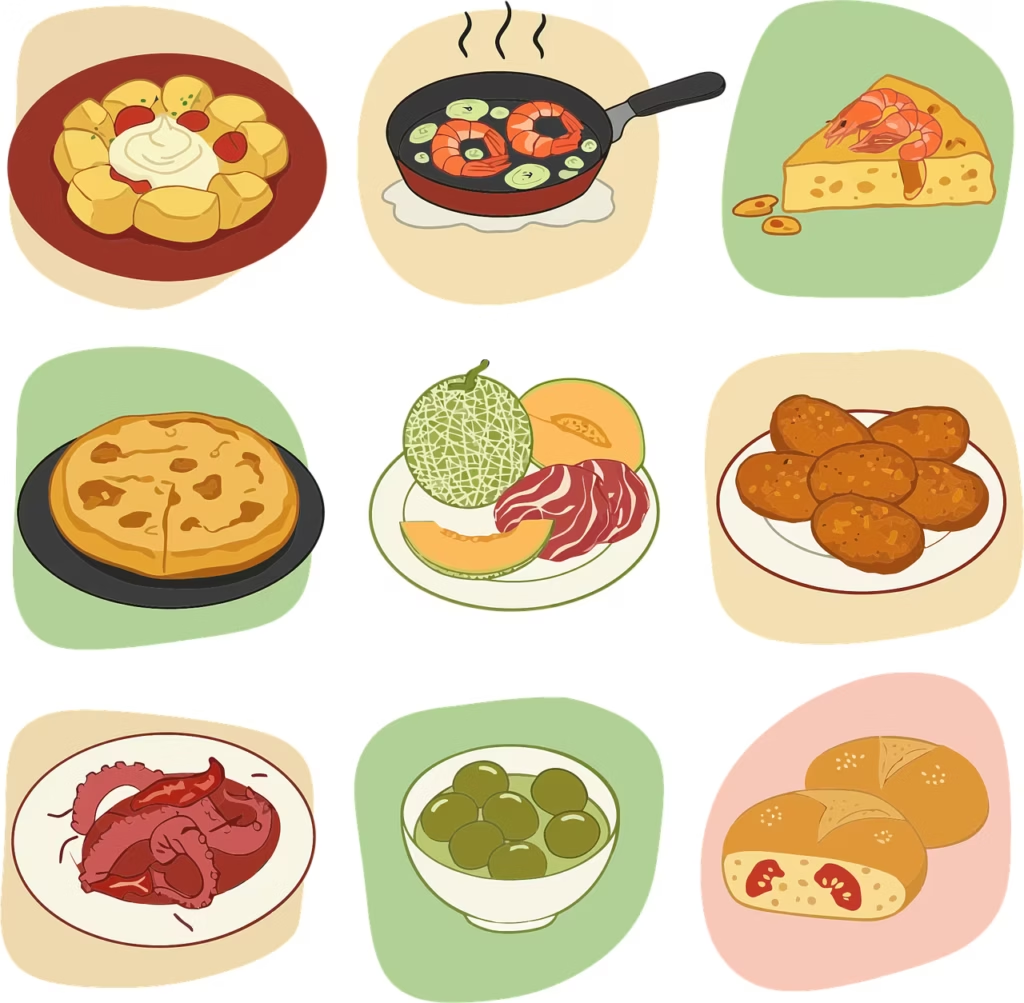
Another defining aspect of Spanish life is its approach to time and work–life balance. Compared to more productivity-driven societies, Spain traditionally emphasizes leisure, rest, and social connection. Practices such as long lunch breaks and late dinners demonstrate a flexible perception of time that prioritizes relationships over strict schedules. During my experiences abroad I have seen this contrast to “clock-based” societies. I would argue ever however that depending on working conditions your lunch breaks might be more flexible.
Spain’s regional diversity is also crucial to understanding everyday life. The country is not culturally uniform; regions such as Catalonia, the Basque Country, and Andalusia each possess distinct languages, traditions, and identities. These regional identities influence food, festivals, political views, and even daily communication. Spain is well known to have different climate depending on the region for such a small country and I would say that this play a role in what discussed before. Weather in Basque country, as close to the Atlantic, if far from the always sunny you expect close to the Mediterranean. Life simply moves at different paces depending on the region. From an anthropological standpoint, this diversity shows how national identity can coexist with strong local cultures, sometimes creating tension but also enriching social life.
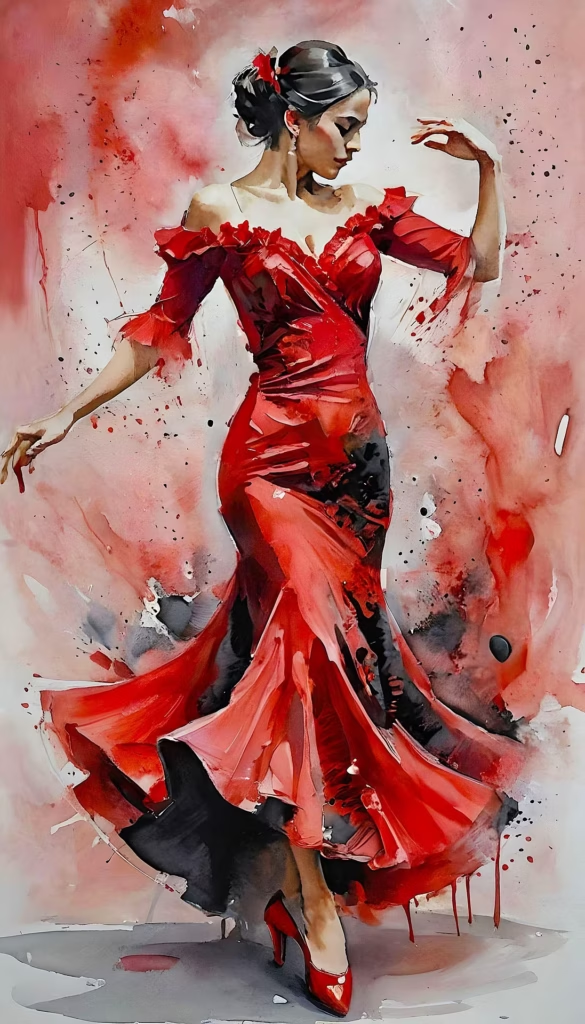
Rituals and festivals further illustrate how culture shapes life in Spain. Events such as Semana Santa, Las Fallas, and La Tomatina are not merely celebrations but social rituals that reinforce shared values, history, and group identity. These traditions bring communities together, strengthen collective memory, and pass cultural knowledge from one generation to the next. As many changes that Spain went through for the past years, such traditions still go on.
Finally, modern life in Spain reflects the effects of globalization and social change. Tourism, digital culture, and economic pressures have influenced work patterns, housing, and social values, especially among younger generations. Anthropologically, this shows how cultures are dynamic rather than static, continuously adapting while still preserving core traditions. I am surprised of the amount of rural properties that I saw being refurbished during past years. As remote working is now a fact, small villages “la españa vacía” stand a chance to bring younger generation that look for a relaxed life style out of busy cities.