
Background
Time travel has long been one of humanity’s favorite thought experiments. While science fiction often focuses on traveling back to fix mistakes or change history, modern physics suggests that backward time travel is far less plausible than it appears. The reason is not technological limitation, but something more fundamental: the direction of time itself.
Entropy and the Arrow of Time
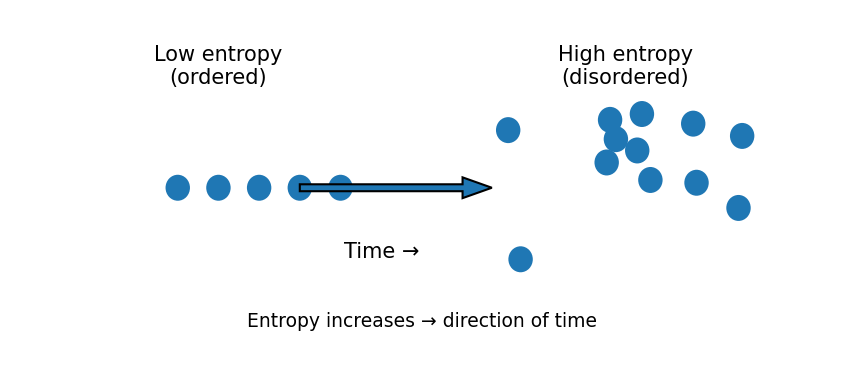
Time has an arrow. We experience it daily through aging, decay, and irreversibility. A broken glass does not spontaneously reassemble, and humans do not grow younger. This one-way behavior is explained by the second law of thermodynamics, which states that entropy — a measure of disorder — tends to increase over time in isolated systems. Entropy gives time its direction, separating past from future.
Aging as Evidence of Time’s Direction
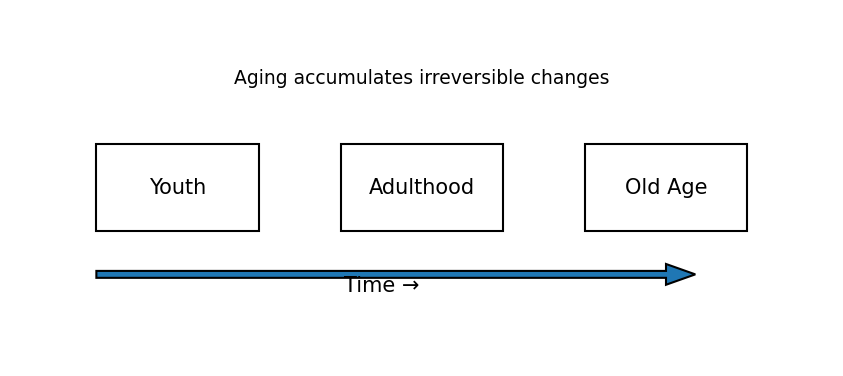
Human bodies accumulate molecular damage, lose efficiency, and gradually move toward disorder. While we may slow aging or manage its effects, fully reversing it would require a global decrease in entropy — something nature does not seem to allow. I see this as time, at least as we observe it, moves forward.
Forward Time Travel in Modern Physics
Forward time travel is not only possible but already real. Einstein’s theory of relativity shows that time passes at different rates depending on speed and gravity. Astronauts aboard fast-moving spacecraft or satellites age slightly more slowly than people on Earth. When they return, they have effectively traveled into the future. This process does not violate thermodynamics because entropy still increases; time simply flows at different speeds for different observers.
Why Backward Time Travel Remains Unlikely
Backward time travel, however, presents a deeper problem. To travel into the past, entropy would need to decrease on a massive scale. Causes would have to follow effects, memories would need to un-form, and order would need to arise spontaneously from disorder. While some mathematical solutions in physics allow such scenarios in theory, they require exotic conditions that have never been observed in reality.
It is interesting that In this sense, backward time travel conflicts not just with common sense, but with the thermodynamic structure of the universe. Forward time travel moves with the arrow of time; backward time travel would have to fight it.
Conclusion
Although backward time travel appears unlikely under our current understanding of physics, history reminds us that scientific knowledge evolves. Ideas once considered impossible—such as flying, space travel, or bending time itself—are now part of everyday technology. Backward time travel may ultimately prove unattainable, but exploring its limits continues to deepen our understanding of time, causality, and the universe. Even unanswered questions move science forward.
Is our fascination with backward time travel about physics, or about our relationship with regret and memory?